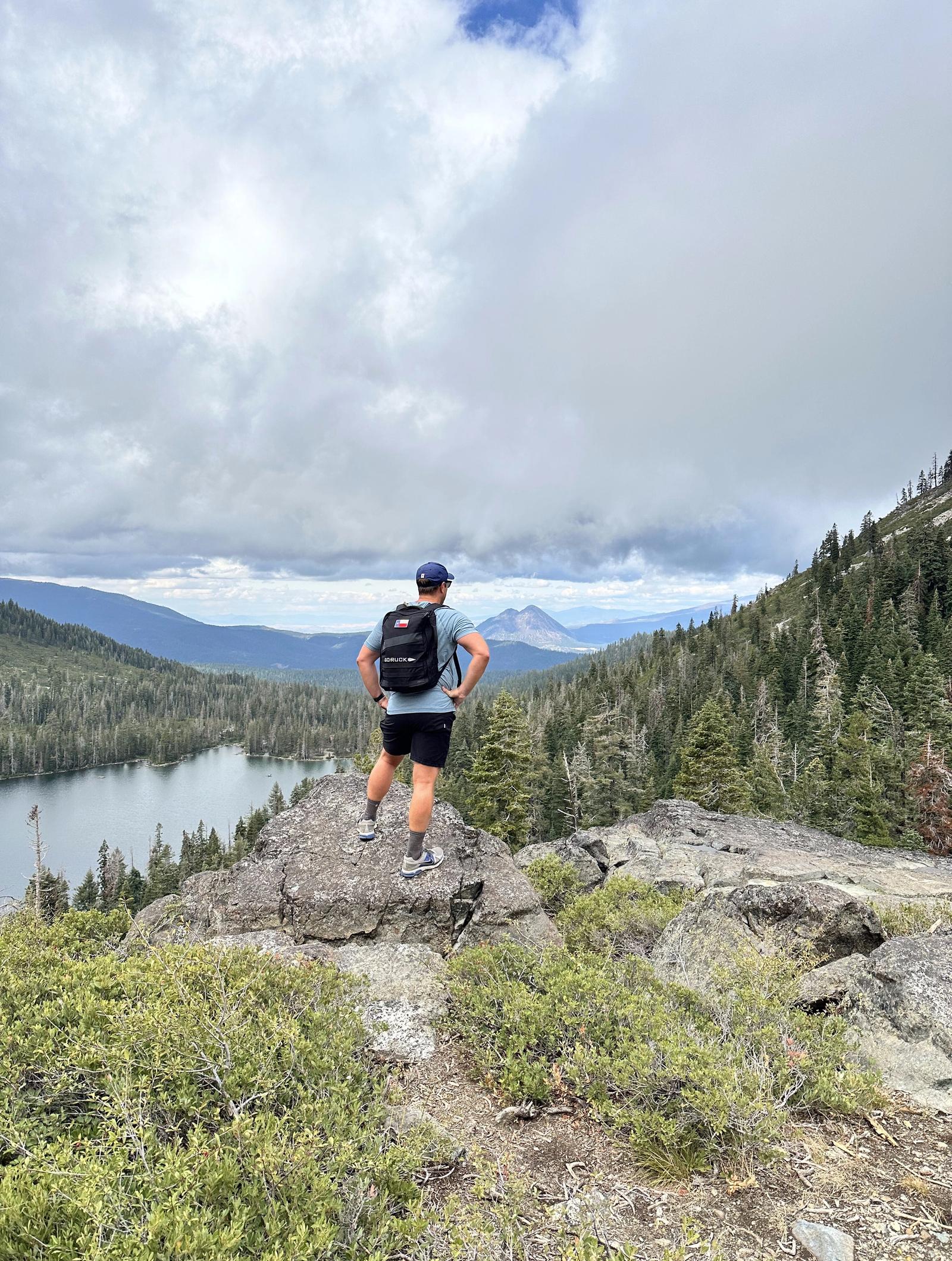
Hi. I'm Matt.
I grew up in a small town in Northern California. I've been moving toward bigger places and harder problems ever since.
A hotel school plaque about service made more sense to me than it probably should have. That instinct followed me into the Army, into Deloitte, into an MBA, and eventually into real estate — which turned out to have more hard problems than I expected.
I'm interested in how things work. More interested in how they could work better.

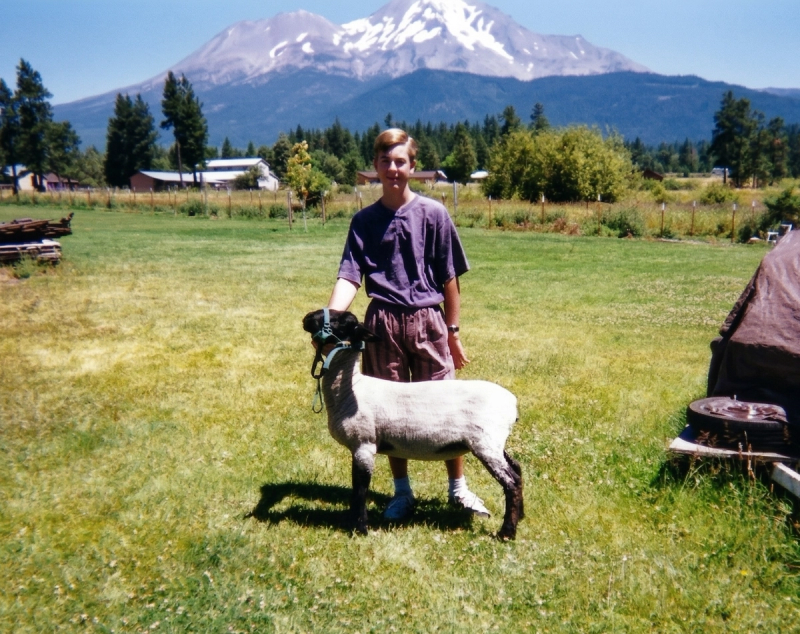
I grew up in Mount Shasta, California — small town, Eagle Scout, 4-H, student body president. The kind of place that teaches you early that how you treat people follows you around.
An ROTC scholarship got me to Cornell, which got me into the Army, which got me to Iraq — four times. Eight years of service that taught me how to lead through people, navigate complex systems, and make decisions when the stakes are real.
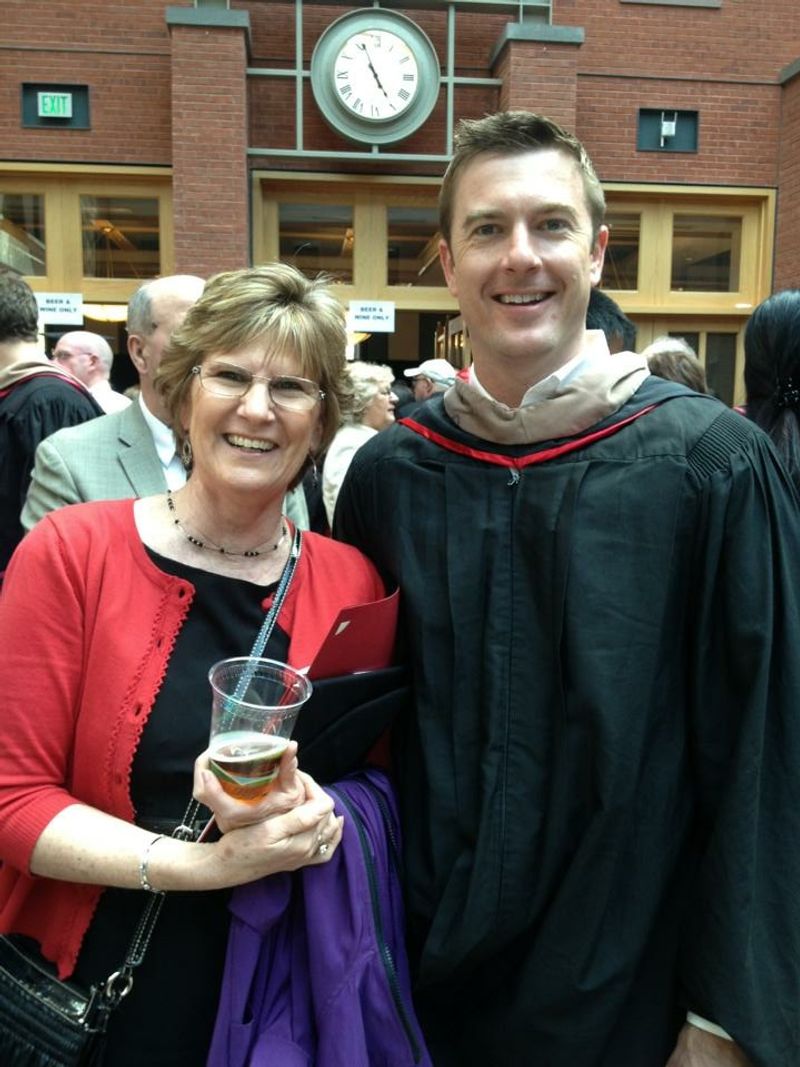
I came back to Cornell for an MBA, went to Deloitte to put it to work, and landed in Dallas. When I decided I was done with weekly travel and ready to build something of my own, real estate turned out to be the right vehicle — the same skills, but pointed at something that mattered more to me.
I've been doing it for nearly a decade now. Longer than I originally planned, honestly. What's kept me here is how much it demands — analyst, advisor, marketer, content creator, business owner, all at once. I started tracking detailed market data early and then built a methodology around it called the Wise Coyote Method. I eventually launched a podcast because I kept meeting interesting people.
Matt Haistings spent eight years as an Army officer, two years at Deloitte, and the last decade in real estate — which turned out to have more in common with the first two than he expected. Along the way he built the Wise Coyote Method, a data-driven framework for reading real estate markets, and hosted The Matt Haistings Podcast. He's based in Dallas but would rather be skiing.
Each chapter built something the next one needed.
I considered development and investing before landing on sales as the right entry point. What I found when I got there surprised me. Most agents weren't building businesses — they were making one sale at a time and recreating the wheel every time. Artists who loved houses, not business people. I saw an opportunity in that gap.
What's kept me in real estate — maybe longer than I originally planned, and I won't pretend I haven't questioned it — is how dynamic it actually is. Most people think of real estate agents as salespeople, which isn't wrong. But the good ones are also running a small business: content creator, marketer, analyst, advisor, consultant, brand builder. Every few years the industry shifts and you either adapt or you don't. I've found that part genuinely interesting.
In 2019 I joined Compass — the Nordstrom of real estate, as I saw it. The industry was splitting between high-advice, high-service agents and door-openers. Compass put me in the right environment. I've always believed in the power of who you're around.
The market research eventually led to videos. The videos led to hiring a videographer. The videographer made the podcast possible. None of it was a master plan — just following the work wherever it was most interesting.

The work was genuinely interesting — mostly oil and gas, working inside major energy companies on everything from cost structure analysis to executive leadership alignment. Someone at Deloitte said "God is in the details" and I've never forgotten it.
What I kept noticing was the nature of the work: helping executives extract more profit from already-successful businesses. Valuable — just not what I wanted to do. I wanted to help people make decisions about building a better life. Real estate turned out to be exactly that, with the same skill set pointed in a different direction.

Walking back onto campus, my first thought was: I'm surprised they haven't run out of rich kids yet. The Johnson School was genuinely pro-veteran — they invited us early for math camp to prepare for the analytical coursework ahead. By the end of the first day all the veterans were sitting together in the back row. We stayed friends for the entire program.
What I found was that the MBA gave language and structure to things I already understood intuitively. Leadership, complexity, decision-making under pressure — I'd lived all of it. Cornell helped me articulate it.
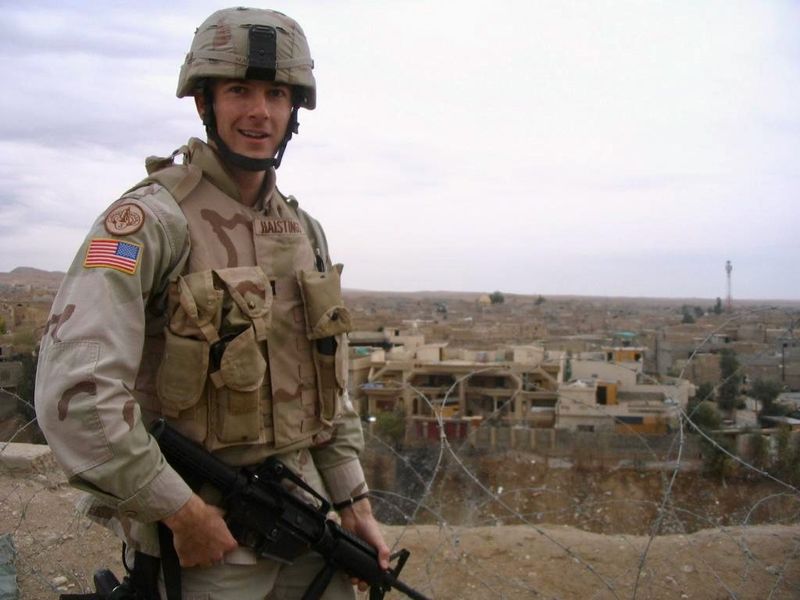
I chose Transportation Corps as my branch. Logistics made sense with a hospitality degree, and Transportation wasn't the popular choice — so naturally I got my first pick. This was also before anyone fully understood IEDs or the danger of convoys. I was mostly naive. Which, in retrospect, was probably a gift.
The night before I deployed for the first time, my family drove out to Fort Carson and we had Thanksgiving dinner together at the Broadmoor. It was wonderful. The next morning I checked out of my extended-stay hotel, my parents dropped me off, and I started the long journey to meet up with my unit — the 3rd Armored Cavalry Regiment — who had already been in Iraq for months. The infrastructure was still being built. It took a while to find them.
I was immediately assigned as a platoon leader and eventually started leading convoys. That was the first of four deployments over my Army career.
I stayed with the 3rd ACR at Fort Carson for three years — two deployments, multiple positions, learning what it meant to actually execute at the front line. Delivering supplies over those last miles. Repairing equipment in the field. Then I got promoted to Captain, went through the Captain's Career Course at Fort Lee, and was assigned to the 1st Theater Sustainment Command — a two-star logistics headquarters responsible for all ground logistics operations across the Middle East. If the 3rd ACR was the last mile, this was the whole map. I was low on the totem pole but I learned how the big Army worked, and more importantly, how to navigate it.
The highlight was Company Command. I commanded 210 soldiers — and a month after taking command, we received surprise deployment orders to support the drawdown of forces from Iraq. Leading a company is different from leading a platoon. You lead through people. You learn to do only the things that only you can do, and trust everyone else with the rest. That's where selfless service stopped being a phrase on a poster and became something I actually understood — seeing how directly my decisions and presence affected the people under my command. Mentoring lieutenants and sergeants. Trying to shape their experience the way someone had shaped mine.
What the Army taught me that I didn't expect: how to navigate large, complex systems. How to make sense of a big machine and find a way to succeed inside it — while also seeing its limitations clearly. And how to communicate across every level. Cornell prepares you to work with smart people. The Army teaches you to work with everyone. You learn to distill complexity: tell the front-line soldier the mission in one sentence, then turn around and brief the senior officer on the same situation with completely different language. That skill has followed me everywhere.
I was an overachiever by small-town standards. Eagle Scout. Class president. Student body president senior year, which meant giving a speech at graduation. I helped start a student store that funded school events — my first real taste of building something from nothing. Summers I mowed lawns and raised a lamb in 4-H. Evenings I worked the line at Burger King, back when fast food was mostly high schoolers having a good time.
Cornell Hotel School was the dream. When I got in early admission and realized we couldn't afford it, I didn't look for another school — I applied for an Army ROTC scholarship. Got it. That one decision changed everything. At the time it felt like a solution to a financial problem. Looking back, it was the first of several moments where a single choice sent everything in a completely different direction.
The Hotel School is where I saw the Statler plaque for the first time. "Life is service — the one who progresses gives a little more, a little better service." It made more sense to me than it probably should have.